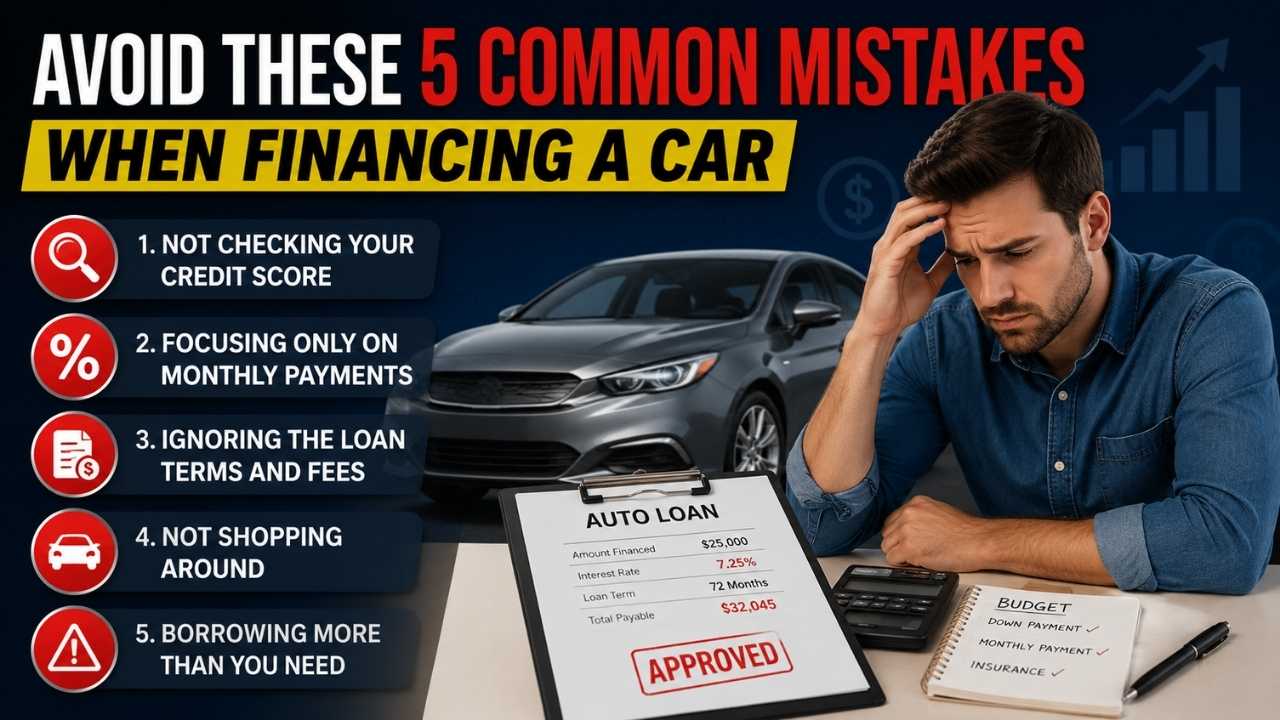
Buying a car is an exciting milestone, but financing it without proper planning can quickly turn into a financial burden. Many people focus only on monthly payments and overlook important details that affect their long-term financial health. A car loan may seem simple at first, but small mistakes during the financing process can lead to higher costs, unnecessary stress, and long repayment periods.
Understanding the common mistakes people make when financing a vehicle can help you make smarter decisions and save a significant amount of money. Whether you are purchasing your first car or upgrading to a newer model, careful financial planning is essential for a successful and stress-free experience.
Ignoring Your Budget Before Choosing a Car
One of the biggest mistakes buyers make is selecting a car before evaluating their actual budget. Many people become emotionally attached to a vehicle and later realize that the monthly payments, insurance costs, fuel expenses, and maintenance charges are far beyond what they can comfortably afford.
Before visiting a dealership or applying for financing, calculate your monthly income and fixed expenses. Consider how much you can realistically spend on transportation without affecting savings, rent, groceries, or emergency funds.
Remember that car ownership involves more than loan payments alone. Fuel prices, servicing, repairs, parking fees, and insurance can add substantial costs over time. Choosing a vehicle that fits your financial situation helps prevent future stress and missed payments.
A practical approach to budgeting allows you to enjoy your car without damaging your overall financial stability.
Focusing Only on Monthly Payments
Many buyers make the mistake of concentrating only on low monthly payments while ignoring the total cost of the loan. Dealerships often offer extended loan terms that reduce monthly installments, making the car appear more affordable. However, longer loan periods usually result in paying much more interest over time.
For example, a lower monthly payment over seven years may seem attractive compared to a higher payment over four years, but the total repayment amount can increase significantly because of accumulated interest.
Instead of looking only at monthly affordability, evaluate the full loan amount, interest rate, and repayment duration. Understanding the complete financial picture helps you avoid paying thousands more than necessary.
A balanced loan term with manageable payments and lower total interest is often the smarter choice.

Skipping Loan Comparison and Research
Another common mistake is accepting the first financing offer without comparing other options. Many buyers rely entirely on dealership financing because it seems convenient, but this can sometimes result in higher interest rates and less favorable terms.
Banks, credit unions, and online lenders often provide competitive loan options that may save money over the life of the loan. Taking time to compare rates, repayment terms, and fees can make a major difference.
Your credit score also affects financing offers. Buyers with strong credit histories often qualify for lower interest rates, while poor credit may lead to expensive loan terms.
Researching lenders and understanding your financing options before entering a dealership gives you more negotiating power and confidence during the buying process.
Well-informed buyers are usually able to secure better deals and avoid unnecessary financial pressure.
Making a Small or No Down Payment
Many people prefer low or zero down payment offers because they allow immediate car ownership with minimal upfront cost. While this may sound convenient, it often creates larger financial problems later.
A small down payment increases the total loan amount, resulting in higher monthly payments and more interest over time. It can also lead to negative equity, where the car’s value becomes lower than the remaining loan balance.
Cars naturally lose value quickly during the first few years of ownership. If you finance almost the entire purchase price, you may owe more than the vehicle is worth for a long period.
Making a larger down payment reduces borrowing costs, lowers monthly payments, and improves overall loan conditions. It also demonstrates financial responsibility to lenders, which may help secure better financing terms.
Saving for a reasonable down payment before purchasing a car is often a financially wise decision.

Not Reading the Loan Agreement Carefully
Many buyers sign financing documents without fully understanding the terms and conditions. This mistake can lead to unexpected fees, penalties, and unfavorable loan conditions that create long-term financial challenges.
Loan agreements often include important details about interest rates, late payment charges, prepayment penalties, warranties, and additional dealership products. Some buyers unknowingly agree to expensive add-ons that increase the total loan amount.
Before signing anything, carefully review all documents and ask questions about anything unclear. Never feel pressured into making immediate decisions without understanding the agreement completely.
Pay close attention to the annual percentage rate, total repayment amount, and repayment schedule. Understanding these details helps you avoid surprises later.
Taking a few extra minutes to review the contract carefully can protect you from costly mistakes and financial complications.
Why Credit Score Matters in Car Financing
Your credit score has a major influence on the financing process. Lenders use credit history to determine how risky it may be to approve your loan application.
A strong credit score can help you qualify for lower interest rates, smaller down payment requirements, and better loan terms. On the other hand, poor credit may result in high-interest loans that significantly increase overall repayment costs.
Before applying for car financing, check your credit report for errors or unpaid debts. Paying bills on time and reducing existing debt can improve your score over time.
Even a slight improvement in credit score can make a noticeable difference in loan offers and long-term savings.
Managing your credit responsibly before purchasing a vehicle creates stronger financial opportunities.

The Importance of Considering Future Financial Goals
Financing a car affects more than just your current budget. It also impacts your future financial flexibility and long-term goals.
Large car payments may reduce your ability to save for a house, invest in education, build emergency savings, or handle unexpected expenses. Many people underestimate how much a long-term car loan can influence other financial priorities.
Before committing to financing, think about how the loan fits into your overall financial plans. Choosing a more affordable vehicle can provide greater financial freedom and reduce future stress.
Responsible financial decisions today can create stronger stability and opportunities later in life.
Final Thoughts
Financing a car can be a smart and convenient option when approached carefully. However, common mistakes such as ignoring your budget, focusing only on monthly payments, skipping loan comparisons, making small down payments, and signing agreements without proper review can lead to unnecessary financial problems.
Understanding the full cost of financing, improving your credit score, and planning responsibly can help you secure better loan terms and maintain financial stability.
A car should improve your lifestyle, not become a financial burden. By avoiding these common mistakes and making informed decisions, you can enjoy your vehicle with greater confidence and peace of mind while protecting your long-term financial future.