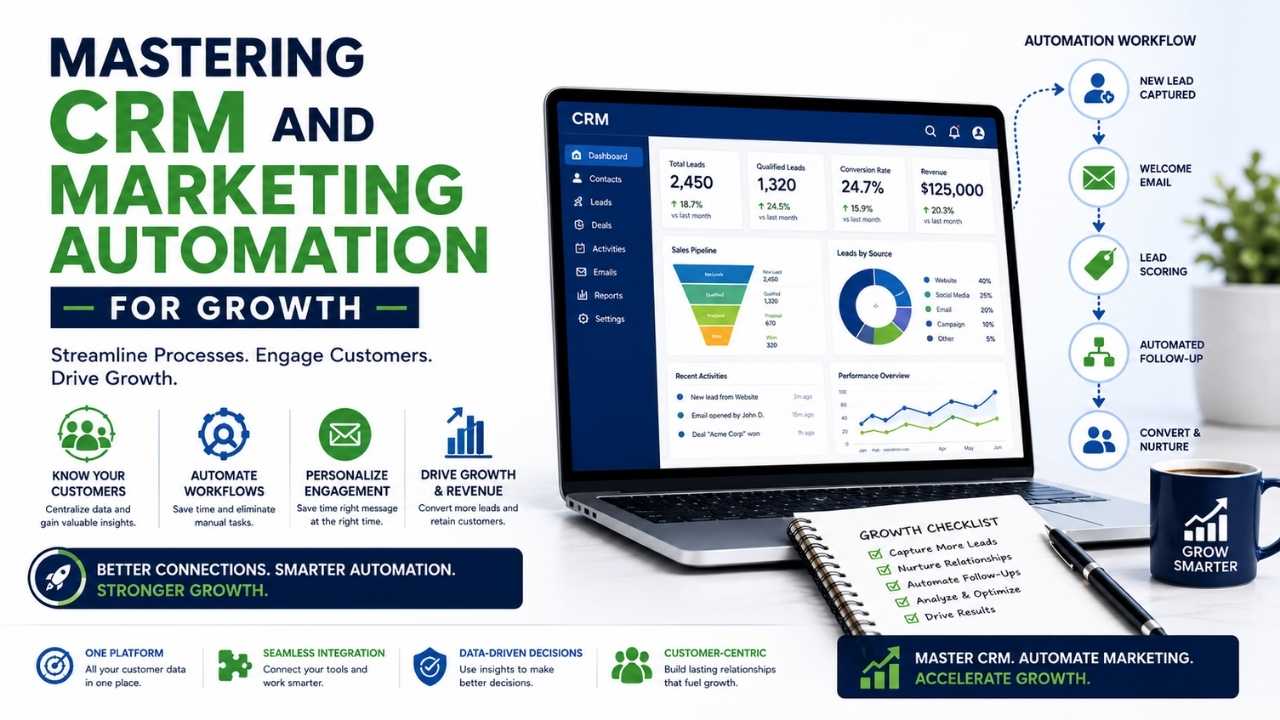
In today’s competitive business world, companies are constantly searching for smarter ways to attract customers, build relationships, and increase revenue. Businesses of all sizes are now realizing that growth is no longer only about selling products or services. It is about understanding customers, improving communication, and creating personalized experiences that encourage long-term loyalty.
This is where CRM and marketing automation play an important role. Together, these tools help businesses manage customer relationships, streamline marketing tasks, and improve overall efficiency. Companies that successfully combine customer relationship management with automation strategies often experience faster growth, stronger customer retention, and better decision-making.
As digital marketing continues to evolve, mastering CRM and marketing automation has become essential for businesses that want to stay ahead in a crowded marketplace.
Understanding CRM and Its Importance
CRM, or Customer Relationship Management, is a system designed to help businesses organize and manage interactions with customers. It stores valuable information such as contact details, purchasing history, communication records, and customer preferences.
Instead of relying on scattered spreadsheets or disconnected tools, businesses can use CRM software to create a centralized database that improves communication between teams. Sales representatives, marketers, and customer support agents can all access the same information, leading to a more consistent customer experience.
One of the biggest advantages of CRM is its ability to strengthen customer relationships. Businesses can track customer behavior, identify buying patterns, and understand what clients truly need. This allows companies to provide more personalized service and build trust over time.
A strong CRM system also improves productivity. Teams spend less time searching for information and more time focusing on customer engagement and sales opportunities.
The Role of Marketing Automation in Modern Business
Marketing automation refers to the use of software and technology to automate repetitive marketing tasks. These tasks may include email campaigns, social media scheduling, customer follow-ups, lead nurturing, and performance tracking.
Automation allows businesses to communicate with customers more efficiently without sacrificing personalization. For example, companies can send welcome emails to new subscribers, follow up with potential leads, or recommend products based on previous purchases.
One of the greatest benefits of marketing automation is time savings. Businesses no longer need to manually manage every communication process. Automated workflows handle routine tasks while teams focus on strategy, creativity, and customer relationships.
Automation also improves accuracy and consistency. Messages are delivered at the right time, reducing the chances of missed opportunities or delayed responses.

How CRM and Marketing Automation Work Together
While CRM and marketing automation are powerful individually, they become even more effective when integrated.
A CRM system collects and stores customer data, while marketing automation uses that data to create targeted campaigns and personalized communication. This combination helps businesses deliver the right message to the right audience at the right time.
For example, if a customer downloads a company’s ebook or visits a pricing page, automation software can instantly trigger follow-up emails tailored to that customer’s interests. At the same time, the CRM system records these interactions, helping sales teams understand where the customer is in the buying journey.
This integration creates a seamless flow of information between marketing and sales departments. As a result, businesses can improve lead conversion rates, reduce communication gaps, and create stronger customer experiences.
Improving Customer Engagement Through Personalization
Modern customers expect personalized communication. Generic marketing messages are less effective because consumers are constantly exposed to large amounts of advertising content.
CRM and marketing automation allow businesses to create highly targeted campaigns based on customer preferences, behavior, and purchase history. Personalized emails, product recommendations, and special offers make customers feel valued and understood.
For instance, an online retailer can send birthday discounts to customers or suggest products related to previous purchases. A service-based company can follow up with clients after appointments and provide customized recommendations.
Personalization not only improves customer satisfaction but also increases engagement and conversion rates. Customers are more likely to respond positively when communication feels relevant to their needs.
Boosting Sales and Lead Generation
Generating leads is one of the most important goals for any growing business. CRM and marketing automation tools make lead generation more efficient by identifying potential customers and guiding them through the sales funnel.
Automation can capture leads through website forms, social media campaigns, or landing pages. Once a lead enters the system, automated workflows can nurture that lead with educational content, follow-up emails, and personalized recommendations.
Meanwhile, CRM software tracks customer interactions and helps sales teams prioritize leads with the highest potential. This ensures that sales representatives spend time on prospects who are most likely to convert.

Businesses that use CRM and automation together often experience shorter sales cycles and higher conversion rates because they can respond quickly and consistently to customer interest.
Enhancing Customer Retention
Acquiring new customers is important, but retaining existing customers is equally valuable. Loyal customers are more likely to make repeat purchases and recommend businesses to others.
CRM systems help companies maintain strong customer relationships by storing detailed records of interactions and preferences. Marketing automation supports retention efforts by sending regular updates, loyalty rewards, and personalized communication.
For example, businesses can automatically send reminders for subscription renewals, follow-up messages after purchases, or special promotions for long-term customers.
These small but meaningful interactions help businesses stay connected with their audience and increase customer loyalty over time.
Using Data for Smarter Business Decisions
Data plays a major role in modern business growth. CRM and marketing automation tools provide valuable insights into customer behavior, campaign performance, and sales trends.
Businesses can track which marketing campaigns generate the most leads, which emails receive the highest open rates, and which products customers purchase most frequently.
This information helps companies make smarter decisions about marketing strategies, product development, and customer service improvements.
Instead of relying on guesswork, businesses can use real-time data to understand what works and where adjustments are needed. This leads to more efficient marketing efforts and better return on investment.
Common Challenges Businesses Face
Although CRM and marketing automation offer many advantages, businesses may face challenges during implementation.
One common issue is choosing the right platform. Some businesses invest in software with features they do not fully need, while others select tools that lack scalability.

Employee training is another challenge. Teams must understand how to use CRM systems effectively and how to interpret customer data.
Businesses may also struggle with maintaining clean and organized customer information. Inaccurate data can reduce the effectiveness of automated campaigns and customer communication.
To overcome these challenges, companies should invest in proper training, regularly update customer records, and choose software that aligns with their goals and budget.
The Future of CRM and Marketing Automation
Technology continues to transform the way businesses interact with customers. Artificial intelligence, predictive analytics, and advanced automation tools are making CRM systems more powerful and intelligent.
Future CRM platforms are expected to offer deeper customer insights, smarter automation, and improved personalization. Businesses will be able to predict customer behavior more accurately and create highly customized experiences.
As customer expectations continue to rise, companies that invest in CRM and automation strategies will likely gain a stronger competitive advantage.
Businesses that embrace these tools today are better prepared to adapt to changing market conditions and evolving consumer behavior.
Conclusion
Mastering CRM and marketing automation is no longer optional for businesses aiming for long-term growth. These tools help companies build stronger customer relationships, improve marketing efficiency, and increase sales opportunities.
By combining customer data with automated communication, businesses can create personalized experiences that attract, engage, and retain customers more effectively.
Whether a company is a startup or an established brand, investing in CRM and marketing automation can lead to better decision-making, improved customer satisfaction, and sustainable business growth.