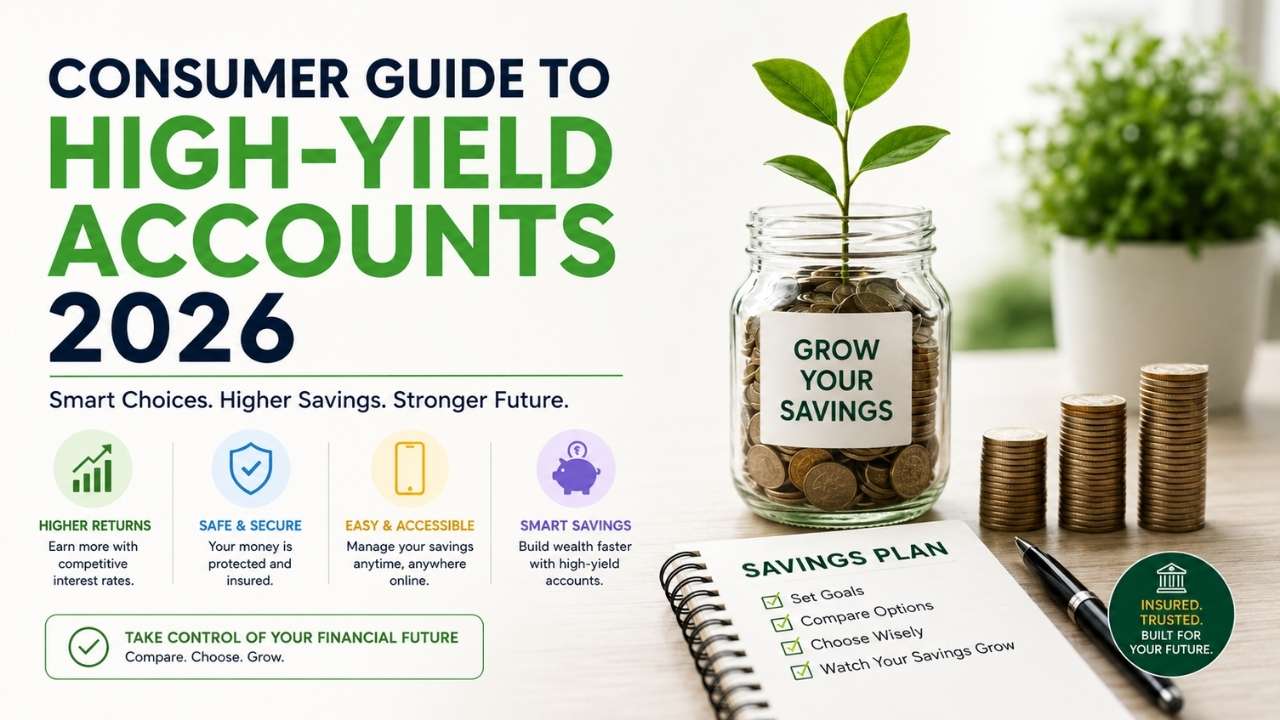
In 2026, consumers are paying far more attention to where their money sits. Traditional savings accounts that once offered almost no return are losing appeal as high-yield accounts continue to provide better opportunities for growing idle cash. With inflation still influencing household budgets and digital banking becoming more advanced, people are searching for smarter ways to save without taking unnecessary risks.
High-yield accounts are no longer limited to finance enthusiasts or experienced investors. Today, students, salaried professionals, freelancers, retirees, and even small business owners are using these accounts to improve their financial stability. However, not every high-yield account delivers the same benefits. Interest rates, withdrawal flexibility, fees, security, and account conditions can vary significantly between financial institutions.
This guide explains how high-yield accounts work in 2026, why they are becoming more popular, and how consumers can choose the right option for their financial goals.
What Is a High-Yield Account?
A high-yield account is a savings or deposit account that offers a higher annual percentage yield (APY) compared to traditional savings accounts. These accounts are generally provided by online banks, digital financial platforms, and some modern credit unions.
The main purpose of a high-yield account is to help account holders earn more interest on their deposited funds while maintaining easy access to their money. Unlike risky investment products, these accounts are designed primarily for safe savings growth.
Most high-yield accounts in 2026 are fully digital, allowing users to manage deposits, transfers, and withdrawals through mobile apps and online banking systems. This digital structure helps financial institutions reduce operational costs, which often allows them to offer better interest rates to customers.
Why High-Yield Accounts Are Popular in 2026
The financial landscape has changed rapidly over the past few years. Consumers have become more conscious of saving, emergency funds, and passive income opportunities. High-yield accounts fit perfectly into these financial priorities.
One major reason for their popularity is rising financial awareness. People now understand that leaving money in low-interest savings accounts can reduce purchasing power over time due to inflation. Even a modest increase in interest earnings can make a meaningful difference over several years.
Another factor is the growth of online banking. Many consumers are now comfortable using mobile banking apps for daily financial activities. Digital-first banks often provide competitive APYs, lower fees, and smoother user experiences compared to traditional institutions.
Economic uncertainty has also encouraged people to keep larger emergency funds. High-yield accounts allow consumers to earn returns while maintaining liquidity, making them attractive during unpredictable economic periods.
Key Features to Look for in a High-Yield Account
Choosing the right account requires more than simply selecting the highest advertised interest rate. Consumers should evaluate several important features before opening an account.
Annual Percentage Yield (APY)
The APY determines how much interest the account earns annually, including compound interest. While a high APY is attractive, consumers should also check whether the rate is introductory or permanent. Some banks advertise temporary promotional rates that decrease after a few months.

Minimum Balance Requirements
Some accounts require users to maintain a minimum balance to earn the advertised interest rate. Falling below this threshold may reduce earnings or trigger monthly charges.
Withdrawal Flexibility
Consumers should understand withdrawal rules before opening an account. Certain institutions may limit the number of monthly transactions, while others provide more flexibility for transferring money.
Fees and Hidden Charges
Monthly maintenance fees, transfer fees, inactivity penalties, and overdraft charges can reduce overall earnings. A truly beneficial high-yield account should have minimal or no unnecessary fees.
Mobile and Online Access
Since many high-yield accounts are digital, a reliable mobile app and secure online platform are essential. Features like instant transfers, budgeting tools, and spending insights improve the overall banking experience.
Security and Insurance
Consumers should verify whether the account is protected by a recognized deposit insurance system. Security features such as biometric login, two-factor authentication, and fraud monitoring also add protection.
Types of High-Yield Accounts Available in 2026
Financial institutions now offer several categories of high-yield products designed for different customer needs.
High-Yield Savings Accounts
These are the most common options. They provide flexible access to funds while offering better interest rates than traditional savings accounts.
Money Market Accounts
Money market accounts usually combine savings features with limited check-writing or debit card access. They may offer slightly higher yields but often require larger balances.
Certificates of Deposit (CDs)
High-yield CDs lock funds for a fixed period in exchange for guaranteed interest rates. They are ideal for consumers who do not need immediate access to their money.
Cash Management Accounts
Popular among digital financial platforms, cash management accounts combine banking and investment features. Some offer competitive yields along with payment and budgeting tools.
Advantages of High-Yield Accounts
High-yield accounts provide several practical benefits for modern consumers.
The biggest advantage is better returns on savings without major financial risk. Unlike stock market investments, these accounts generally provide stable and predictable earnings.

Liquidity is another major benefit. Consumers can usually access their funds quickly during emergencies or unexpected expenses.
These accounts also encourage disciplined saving. Watching balances grow through regular interest payments motivates many people to save more consistently.
Digital convenience adds further appeal. Most modern accounts provide real-time transaction alerts, automated transfers, and user-friendly financial dashboards.
Potential Drawbacks Consumers Should Understand
Despite their advantages, high-yield accounts are not perfect solutions for every financial situation.
Interest rates can fluctuate depending on economic conditions and central bank policies. A competitive rate today may decline later.
Some digital banks have limited customer service options compared to traditional branch-based institutions. Consumers who prefer face-to-face support may find this challenging.
Withdrawal restrictions may also create inconvenience for individuals who frequently move money between accounts.
Additionally, high-yield accounts may not generate enough growth to outpace long-term inflation significantly. For wealth building, consumers may still need diversified investment strategies alongside savings accounts.
How to Choose the Best High-Yield Account
Consumers should begin by identifying their primary financial goal. Someone building an emergency fund may prioritize flexibility and security, while another person saving for a future purchase may focus on maximizing interest earnings.
Comparing APYs across multiple institutions is important, but consumers should also examine account terms carefully. Reading customer reviews, checking mobile app ratings, and understanding fee structures can prevent future dissatisfaction.
It is also wise to consider the institution’s reputation, customer support quality, and digital banking reliability. An account with slightly lower interest but excellent usability may provide a better overall experience.
Consumers should avoid opening accounts solely because of short-term promotional offers without understanding long-term conditions.

Financial Habits That Maximize Earnings
Even the best high-yield account performs better when combined with smart saving habits.
Setting up automatic monthly deposits helps maintain consistency. Many consumers benefit from treating savings contributions like fixed monthly bills.
Keeping emergency funds separate from daily spending accounts reduces unnecessary withdrawals and improves financial discipline.
Monitoring interest rate changes regularly can also help consumers identify better opportunities if market conditions shift.
Finally, combining high-yield accounts with budgeting and long-term investment planning creates a stronger overall financial strategy.
The Future of High-Yield Banking
The high-yield banking sector is expected to become even more competitive in the coming years. Artificial intelligence, personalized banking tools, and advanced financial automation are already transforming how consumers interact with their savings.
Many financial experts believe digital-only institutions will continue expanding their market share due to lower operating costs and innovative features. At the same time, traditional banks may improve their offerings to remain competitive.
Consumers in 2026 have more financial choices than ever before. By understanding how high-yield accounts work and evaluating options carefully, individuals can make smarter decisions that support both short-term stability and long-term financial growth.