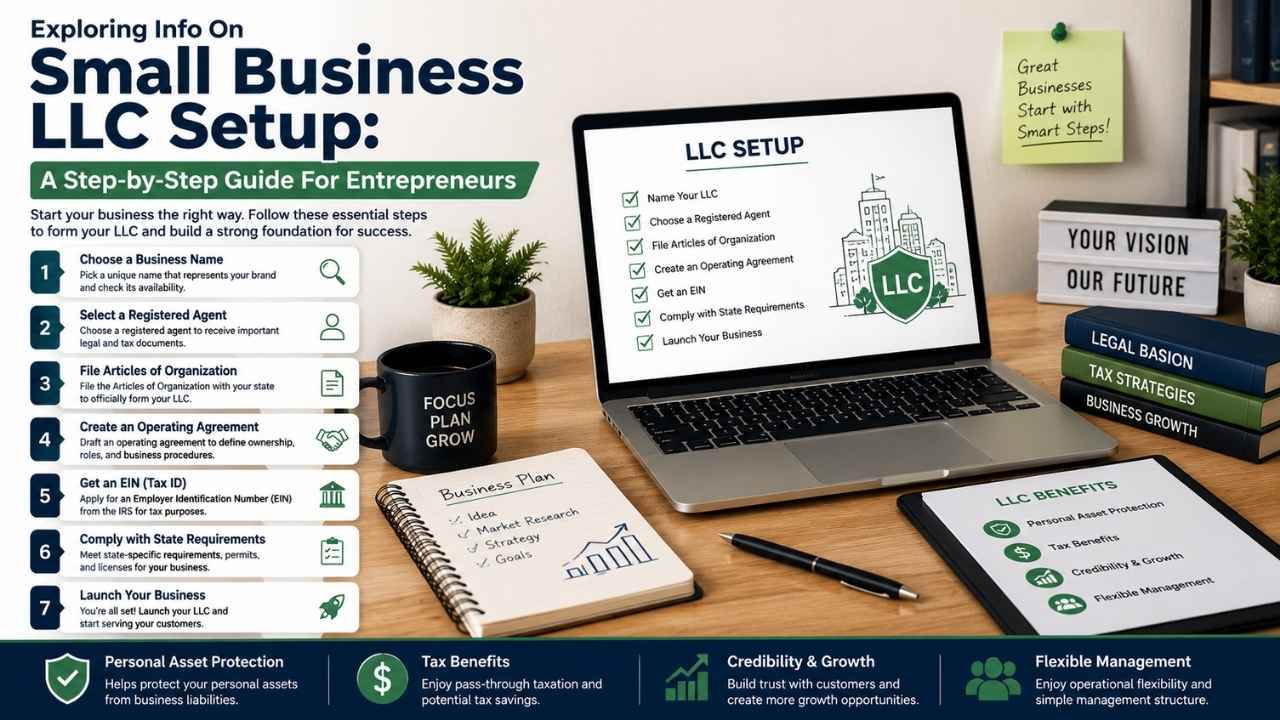
Starting a small business is an exciting step for any entrepreneur, but choosing the right business structure is one of the most important decisions during the early stages. Among the different options available, a Limited Liability Company, commonly known as an LLC, has become one of the most popular choices for small business owners.
An LLC combines flexibility with legal protection, making it suitable for freelancers, online businesses, startups, family businesses, and independent entrepreneurs. This structure helps separate personal assets from business liabilities, which means the owner’s personal savings, home, or property are generally protected from business-related debts or legal claims.
For many entrepreneurs, forming an LLC creates a more professional image while also offering financial and operational advantages.
Why Entrepreneurs Choose an LLC
One of the biggest reasons entrepreneurs prefer LLCs is simplicity. Compared to corporations, LLCs usually involve fewer formal requirements and easier management structures.
Some major advantages include:
- Personal liability protection
- Flexible tax options
- Simpler paperwork
- Greater business credibility
- Easier financial separation
- Flexible ownership structure
LLCs are especially attractive for small businesses because they provide protection without requiring the complex formalities often associated with large corporations.
This balance between flexibility and security makes LLCs a practical option for many first-time business owners.
Step 1: Decide on Your Business Idea and Goals
Before setting up an LLC, it is important to clearly define your business concept and long-term goals. Understanding what type of products or services you plan to offer will help shape future decisions related to licensing, taxes, and operations.
Ask yourself questions such as:
- What problem will the business solve?
- Who is the target audience?
- Will the business operate online or physically?
- Will there be partners or employees?
- What are the long-term growth plans?
A strong business foundation makes the LLC setup process smoother and helps avoid confusion later.
Clear planning also improves financial organization and business strategy from the beginning.
Step 2: Choose a Business Name Carefully
Your business name plays a major role in branding and legal registration. LLC names must usually follow specific state rules and must not already be in use by another registered company.
When choosing a business name, consider:
- Simplicity and memorability
- Relevance to the business
- Professional appearance
- Availability of website domains
- Social media availability
Most states also require the business name to include terms such as “LLC” or “Limited Liability Company.”
Checking name availability early prevents delays during registration.

Step 3: Select the State for Registration
Many entrepreneurs choose to register their LLC in the state where they operate their business. However, some business owners explore other states because of tax advantages or business-friendly regulations.
Popular states for LLC registration often include:
- Delaware
- Wyoming
- Nevada
Despite this, registering outside your home state may create additional paperwork and fees if you still operate locally.
For most small businesses, forming the LLC in the home state is usually the simplest and most practical option.
Step 4: Appoint a Registered Agent
A registered agent is an individual or service authorized to receive legal documents and official notices on behalf of the LLC.
The registered agent must have:
- A physical address in the registration state
- Availability during business hours
- Reliability for handling official communications
Some entrepreneurs serve as their own registered agents, while others hire professional services for convenience and privacy.
Choosing a dependable registered agent helps ensure important legal documents are received promptly.
Step 5: File the LLC Formation Documents
The official LLC setup process begins by filing formation documents with the appropriate state authority, usually the Secretary of State office.
These documents are often called:
- Articles of Organization
- Certificate of Formation
- Certificate of Organization
The paperwork generally includes:
- Business name
- Registered agent information
- Business address
- Ownership details
- Purpose of the business
Filing fees vary depending on the state.
Once approved, the LLC becomes legally recognized as a business entity.
Step 6: Create an Operating Agreement
Although not always legally required, an operating agreement is highly recommended for LLC owners. This document outlines how the business will operate internally.
An operating agreement may include:

- Ownership percentages
- Voting rights
- Profit distribution
- Member responsibilities
- Procedures for adding or removing members
- Business management rules
For single-member LLCs, this agreement still helps clarify business operations and strengthen liability protection.
A well-written operating agreement reduces misunderstandings and supports smoother decision-making.
Step 7: Apply for an EIN
An Employer Identification Number, commonly called an EIN, functions like a tax identification number for the business.
An EIN is usually necessary for:
- Opening business bank accounts
- Hiring employees
- Filing taxes
- Applying for business licenses
Even single-member LLCs often benefit from obtaining an EIN because it helps separate personal and business finances more clearly.
Keeping finances separate strengthens the legal protection offered by the LLC structure.
Step 8: Open a Business Bank Account
One of the most important steps after forming an LLC is separating personal and business finances.
A dedicated business bank account helps:
- Track business expenses
- Simplify accounting
- Improve professionalism
- Protect liability status
- Prepare for taxes more efficiently
Using personal accounts for business transactions can create legal and financial complications later.
Maintaining clean financial records supports long-term business growth and credibility.
Step 9: Understand Licenses and Permits
Depending on the industry and location, businesses may require specific licenses or permits before operating legally.
Examples include:
- Local business licenses
- Sales tax permits
- Professional certifications
- Health permits
- Home business permits
Researching local and state regulations carefully helps avoid fines or operational delays.
Requirements vary widely depending on the type of business and where it operates.
Step 10: Stay Organized With Taxes and Compliance
Running an LLC involves ongoing responsibilities beyond the initial setup. Business owners must stay updated on taxes, reporting requirements, and annual filings.

Important responsibilities may include:
- Filing annual reports
- Paying state fees
- Managing bookkeeping
- Filing business taxes
- Renewing licenses
Many entrepreneurs use accounting software or professional accountants to simplify financial management.
Staying organized helps avoid penalties and supports long-term business stability.
Common Mistakes New LLC Owners Should Avoid
Many first-time entrepreneurs make avoidable mistakes during the LLC setup process.
Common errors include:
- Mixing personal and business finances
- Ignoring legal paperwork
- Choosing the wrong business name
- Missing tax deadlines
- Failing to create contracts
- Operating without proper licenses
Careful planning and professional guidance can help prevent these problems.
Building strong business habits early creates a more secure foundation for future growth.
The Long-Term Benefits of an LLC
An LLC can provide long-term advantages as a business grows. Besides liability protection, this structure often improves credibility with customers, lenders, and business partners.
Benefits may include:
- Easier business expansion
- Greater trust from clients
- More organized financial management
- Improved legal protection
- Flexible management structure
For many entrepreneurs, forming an LLC becomes an important step toward building a stable and professional business.
Final Thoughts
Setting up an LLC is one of the smartest ways for entrepreneurs to protect personal assets while building a professional business foundation. Although the process involves legal paperwork and planning, it is often more manageable than many first-time business owners expect.
By choosing the right business name, organizing finances properly, understanding legal responsibilities, and staying compliant with regulations, entrepreneurs can create a strong structure for long-term success.